Posts

Presentation Schedule & Reminders

The following is a schedule for upcoming presentations. Each presentation should show a basic understanding of the culture's literary history (mostly contemporary, please, although some cultures are thousands of years old...) and note very briefly significant poets, novelists, essayists, philosophers, celebrities, film directors/writers, playwrights, singers, etc. [note: this is a summary. We don't need a lot of information about all of these people--that's impossible. Pick a few key literary or significant artists and tell us how that person influenced the culture in question. We don't really need to know the exact time or date they were born or where they went to school or who they married, unless that's important to their influence and career or helped shape the culture... . Along with your research and presentation, you should include the following: A sample poem or song from a significant poet/singer A sample short, short story (I'll provide these f...
A Crash Course Smattering of Philosophy; Cultural Project

Lab: Use your time in the lab today to continue working on your cultural projects. Prepare your presentation for Thursday if you are going to present on Thursday. Use the short story sample and print out a copy of your sample poem to share with the class (if you give these to me ahead of time, I can run off copies for you...) For those of you interested in a unit we didn't quite get to: What is Philosophy for?  (video) Crash Course Philosophy #1  (an introduction) Watch the videos and discuss the main points with a classmate. Plato Aristotle The Stoics Lao Tzu The Buddha Augustine Thomas Aquinas Rene Descartes Immanuel Kant Soren Kierkegaard Locke & Empiricism Nietzche Existentialism Sartre What is a Good Life? Michel Foucault Jacques Derrida How to Argue How to Argue, Part 2  (induction/abduction) Be a philosopher: Create a premise  (choose one to answer): What is the meaning of life? Why is there evil? Is there a God? What...

Lambent; Portfolio; Cultural Research; Poland & The Baltic States

Image
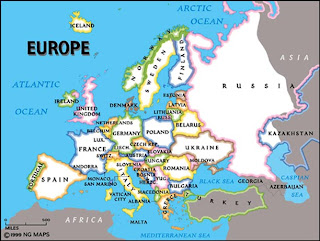
Lab: Please continue to prepare your selection for Lambent. Deadline is tomorrow or you will not be included in the magazine (no exceptions!) Remember to include a short 100 word or less bio or a JPG picture of yourself. Otherwise, please work on your final portfolio (due June 8) and continue your cultural research. See post below. Period 2: Today, a smorgasbord of culture & philosophy while you are reading Handmaid's Tale. For those of you who are not completely exhausted from learning, you may find these resources here helpful in setting your fiction, poetry, plays, and essays in a European setting. Since we are running out of time to cover the entire world in this course, we will only briefly glimpse at a very rich and extensive culture. For your benefit click on these links and learn about these cultures. Some of their literature can be found in the packets of reading as well. Czeslaw Milosz is one of Poland's best loved poets.  His poems can be found he...

Lambent Submissions; Portfolio; Final Cultural Project; Fun Home Discussion

Lab: Please work on your portfolio or Lambent. Lambent info is due Friday to be included. No exceptions. See Karina for details. Finally, your last project/presentation is a cultural examination Please choose and select one of the following cultures: Cuba Colombia Argentina Brazil Mexico Chile China Japan Turkey Poland Russia Thailand Phillippines Vietnam Korea New Zealand Norway Sweden Finland Denmark Iceland Spain Portugal Italy Greece Germany Hungary Austria Czech Republic Switzerland Israel Ireland Scotland Research literary history and contemporary writers (including significant singers, poets, novelists, essayists, celebrities, film directors/writers, playwrights, etc.) and find out what is unique about the culture you picked. How is the culture different from ours? Examine cuisine, gender roles, philosophy, leisure activities, pop culture, art, media, politics, religion, history, as well as authors, etc. Take notes. Along with your r...

PIG Economics Interruption; End of 9 to 5

We will finish the film and, hopefully, have time to discuss it. Please turn in your take-home test on Fun Home . At 8:00 you have to visit Mr. Robach for some PIG requirement thing. HOMEWORK: Work on your Lambent submissions, your portfolio, begin reading Handmaid's Tale if you finished reading Fun Home. Complete Fun Home for a discussion Tuesday (this is held over a week due to interruptions...like Mr. Robach and PIG...)

Lambent: Call for Submissions; Feminist Philosophy; 9-5

Lambent We will be putting together our senior edition of Lambent . See the link for last years sample... Please begin gathering your BEST 3 pieces of writing EVER and a JPG photo of yourself for our senior issue of Lambent. You will be using Advanced Fiction Workshop time to edit, prepare and get your work to me by May 25 (just before Memorial Day break). Students not submitted and edited by that time will not be included in the edition. Ms. Gamzon will give you more info tomorrow. Help her out by selecting and preparing drafts of your best writing. Each entry will have a short bio of 100 words or less. Feminist Philosophy:  please read the packet of feminist philosophers & learn about these women at the following links: Mary Wollstonecraft Simone de Beauvoir Julia Kristeva Ann Oakley Use this information and what you think to write a creative piece of your own. For example, "Women" by Louise Bogan--or write your own personal essay. Use these articles/...

The Bechdel Test & the Mako Mori Test; 9 to 5 & Feminist Criticism

Image
Gender/Feminism/Queer Studies:  See (and keep) handout on gender/feminism and queer criticism. View the following links/videos and explain what the Bechdel test is (what are its rules, for example) and why it might be important when examining pop culture, media, or literature? Use the handout on gender/feminist criticism to help you focus questions to ask while reading the texts... Two "tests" that we can use to determine if a film, video game, novel, tv show, etc. is gender biased is to use the Bechdel Test and the Mako Mori Test. Let's learn how to use them: The Bechdel Test The Bechdel Test vs. The Mako Mori Test Consider your own story narratives (short stories/plays, etc.) Do they pass these tests? If not, why not? Write about it--or revise your stories to correct this oversight. Let's put this to the test by watching the first part of the 1980 film, Nine to Five , director/screenwriter  Colin Higgins , the cinematographer is  Reynaldo Villalo...

Women & Gender: Part 2

Lab: Please use your lab time to complete (see previous posts for details): A war poem draft Further or complete your historical fiction piece A ghazal poem A short story based on the structure of Roselily by Alice Walker A graphic "novel" story like Persepolis or Fun Home . Or read Fun Home (see homework) Period 2: Readings; Read, reflect, comment, write.... Gloria Steinem: "If Men Could Menstruate" Women Against Feminism (Rush Limbaugh) Judy Syfer's essay: "Why I Want a Wife" (1971) Camille Paglia: "The Modern Campus Cannot Comprehend Evil" (2014) Ann Coulter "I Hate Feminism"  (video/audio media, 2017) HOMEWORK: Please read  Fun Home  for next Monday. As you read, consider some of these gender and feminist ideas/questions. Once you finish  Fun Home , please begin reading your Margaret Atwood selection.

Gender & War Discussion/Test; Women & Gender: Part 1

Image
Lab: Test/Discussion on your chosen novel.  1. Please get into your "reading groups" for your chosen novel.  2. Together complete the following tasks for your novel as written on the handout/notes.  3. Finally, rank the participation of your teammates. (See rubric and handout for details).  Between passing time, please go to the library to pick up Fun Home by Alison Bechdel and The Handmaid's Tale or Wilderness Tips by Margaret Atwood. Period 2:    "In my heart, I think a woman has two choices: either she's a feminist or a masochist." —Gloria Steinem "The day will come when men will recognize woman as his peer, not only at the fireside but in councils of the nation. Then, and not until then, will there be the perfect comradeship, the ideal union between the sexes that shall result in the highest development of the race." —Susan B. Anthony "In passing, also, I would like to say that the first time Adam had a chance he ...

The Ghazal; Persepolis: Part 2

The  Ghazal  is a poetic form consisting of rhyming couplets and a refrain, with each line sharing the same meter. A ghazal may be understood as a poetic expression of both the pain of loss or separation and the beauty of love in spite of that pain. The form is ancient, originating in 6th century pre-Islamic Arabic verse. It is one of the principal poetic forms which the Indo-Perso-Arabic civilization offered to the eastern Islamic world. History: The ghazal spread into South Asia in the 12th century under the influence of the new Islamic Sultanate courts and Sufi mystics. Although the ghazal is most prominently a form of Persian and Urdu poetry, today it is found in the poetry of many languages. The Arabic word غزل Ä¡azal is pronounced [ˈɣazal], roughly like the English word  guzzle . The Form: A ghazal is composed of five or more couplets. The second line of each couplet in a ghazal usually ends with the repetition of a refrain of one or a few words, known as...

Iranian Literature Sampling; Persepolis: Day 1

Thank you for participating (and running) the coffeehouse last night. Good job! The 8th graders are taking a math exam today in our lab. So, let's watch this instead: Persepolis (2008) by Marjane Satrapi But first a little  history of Iran . Watch the crash course video and learn something about Iranian culture/history for context. Hafez : (Persian/Iranian poet) Ode 44 (translated by Richard le Gallienne)  Last night, as half asleep I dreaming lay,     Half naked came she in her little shift,          With tilted glass, and verses on her lips; Narcissus-eyes all shining for the fray,          Filled full of frolic to her wine-red lips,          Warm as a dewy rose, sudden she slips     Into my bed – just in her little shift. Said she, half naked, half asle...

Last Practical Notes on Revision; Developmental Stages of Creative Work; Coffeehouse Prep

The last I'll say about revision. When we write, we generally go through the following steps (although not always in order...): 1. Initial generating stage: get an idea, write a draft 2. Creative revisioning stage (drafts 2 - ?): add and play with your draft 3. Constructive revisioning stage (drafts 2 - ?): cut and shape your draft; get feedback from others 4. Copyediting: correct your draft; have someone proofread your work and point out mistakes (or, eventually, you need to be able to do this yourself) Workshopping: Look for "hotspots" or what is enjoyable in the draft - note it; everyone should say something they liked about the draft (a line, a character, an idea, a theme, some dialogue, a sentence, etc.) You don't have to try to satisfy everyone's comments/criticisms of your work; listen to your own artistic heart... Conduct an anti-workshop: take an aspect of the story and turn it on its head; complete an exercise; rewrite; see creative exercises...

Revision vs. Editing; Historical Fiction Project; War Poem Drafts; Reading

Many young writers confuse editing with revision. There is a distinct difference between the act of revising and the act of editing . Editing involves some of the following actions: Proofreading (examining your work for mistakes) Correcting grammar Correcting syntax or making your sentences more concise and readable Changing general words to more specific words  Removing or cutting lines, unnecessary details, scenes, characters, etc. Revision , however, is all about development and shaping of the story--or what is, essentially, art. It is: Developing the idea or theme of the piece Developing a character, setting, or plot element Introducing literary elements to strengthen theme, tone, setting, character, conflict, diction, etc. Considering the structure of the narrative Working on the shape of the story (openings, scenes, development of plot, character, setting, theme, middles, ends, etc.) So think of revision as a lump of clay (your draft) that you are ...

War & Men; Historical Fiction; War Poetry Draft(s)

Period 1: Lab There will not be a test on Maurice after all. Sorry about that. Instead, let's press on. Although women may serve (and serve well) in the armed forces, military and fighting wars tends to be something we expect men to do, rather than women. This is a socially constructed gender bias , just like issues involving employment, funding, and equal protection under the law. Males, for example, are required by law to register for selective service. Females don't, although many would consider them both to be capable of serving their country. Recently, as you are probably aware, transgender citizens are banned from serving (males transitioning into women are required to register--women who transition to male are not). Let's take a closer look at the military in popular culture. War & Men : (25 minutes) Please read the essay: The Shock of War  (essay) Then click on the links below and compare/contrast the different honor codes. How do these codes...

Men & Masculinities; Maurice

Library Lab: period 1 Please go to the library for class today (or Ms. Gamzon's lab if there are no computers available). Work on your masks of masculinity essay projects. See posts below.  Select and work on a piece for our upcoming coffeehouse. Turn in your notes for Maurice to my sub. Complete Maurice (at least part 1). Feel free to continue reading the book on your own if you want to. We'll discuss it next class. HOMEWORK: Complete part 1 of  Maurice . [One of our greater tasks will be a choice of writing an historical fiction piece (perhaps set in the Edwardian period or just before, during, or after The Great War). As you read  Maurice , try to pick up Forster's psychological style. Include mythology, the monomyth of the hero's journey, or any other topic to inspire you regarding gender roles, our culture, and issues concerning masculinity. Again,  The Art of Manliness  (linked to your right of this page) is a good (and fun) resou...

Men & Maurice - Part Deux

Lab: Read this essay . Why We Should Celebrate Masks of Masculinity . Consider key points in the article. Be ready to bring up points in our short discussion 2nd period about the article. When you are done with the article and have thought about what you've read and how it fits into what we've been discussing, move on to other tasks during period 1. Please listen to one of the popular podcasts from the website  The Art of Manliness . You'll find the podcasts on the right side of the webpage near the bottom. Choose one podcast to listen to and write a review of the main points the speakers are making about men, our culture, and your reaction to the message.  Reviews of podcasts are due Tuesday, April 17  (along with your reaction article from the post on the toxic masculinity articles from Monday's class--see assignment below). Finally, spend at least 10 minutes this morning preparing for our reading of Maurice . Maurice  Notes: Take a moment to view this...

Of Men and Maurice

Please pick up the novel Maurice by E.M. Forster from the library. We will be examining Part 1 of the novel after our discussion. Kahoot:  Myth of Masculinity Survey/Quiz  & discussion. Let's screen  Crash Course Mythology #25: The Hero's Journey. Maurice Notes: Take a moment to view this short video about Edwardian childhood An Edwardian Childhood (documentary clip) Edwardian Summer (Pathe' Brothers Newsreel) Edwardian Photographs Choosing a College at Cambridge (promotional video); &  Cambridge: How Do Cambridge Colleges Differ? (vlog) Uncover the Truth about the Life of Edwardian Families (documentary) See handout on Edwardian Etiquette or view this link for more details/articles .  Maurice is a romantic look at the innocence of the Edwardian period. The book is dedicated to "a happier year"--in particular, just before The Great War. Men (and boys) were still very much influenced by the Victorian ethic: to be ernest, bold, c...

Lone Ranger Discussion; Masculinity & Mythology

Lab: Welcome back! I hope you had a restful (if cold) spring break! TASK #1: This morning we're preparing for our discussion on the short story collection "The Lone Ranger and Tonto Fistfight in Heaven" by Sherman Alexie, while also examining some key aspects of those stories and our next unit on Gender: Men & Masculinity. To start off, take a quick look at one of the scenes from the most recent reiteration of The Lone Ranger (the 2013 pop culture film, starring Johnny Depp as Tonto and Armie Hammer as The Lone Ranger). As you watch, consider how the roles of the Lone Ranger and his "comic" sidekick Tonto enact their male duty or responsibilities. TASK #3: To read: (I suggest you complete your blog post first--see below...) during the lab, please read the collection of short articles taken from some recent magazine/newspapers about men. After reading, write your reaction to what some of these issues are, how you view them, whether or not you find...

Portfolio Due; Smoke Signals (film)

While we will meet in the lab to prepare our portfolios, once you have completed your printing and turn in your portfolio, come down to the classroom to join us in our viewing of Smoke Signals   (1998) directed by Chris Eyre; screenplay by Sherman Alexie. Remember to attach old drafts (particularly the ones I (or your peer group) marked up) to new drafts (new drafts on top!)  It is better to turn in what drafts you have now, than turn in your entire portfolio later. But remember that late work is only one small part of your portfolio grade. The rubric is a general overall average based on class participation, behavior, writing quality, creativity, growth, and skill. Portfolios are due March 28. If you turn in your work after class (still on March 28 by 2:30--end of day) your work is not late. Print out copies of your drafts on your own--don't expect to email me and have me do your prep work. Take responsibility for your own work. Refer to the rubric for how your portf...