Posts

Manchurian Candidate; Portfolio Drafts

Period 1: (until 8:00) Please work on your required drafts (critical evaluation & dystopian story). Also, read and note the various sources below to prepare for your synthesis of The Manchurian Candidate . Source 1: Roger Ebert review of the film Source 2: The Search for the Manchurian Candidate Source 3: Manchurian Candidate: No Mere Fiction Source 4: Conspiratorial Facts Source 5: Greenwald: No Evidence for Russian Hacking Source 6: A Demand for Russian "hacking" Proof Source 7: Accessing Russian Activities ICA report  and  article from Mother Jones site S ource 8: Who Controls the Money, Controls the World  (video) Source 9: Noam Chomsky: BBC Interview  (video) Source 10: As Flynn Falls Under Growing Pressure Source 11: What Happened to Trump's Russia Scandal? Source 12:  Graffiti  (Trump & Putin) Source 13:  SNL: Putin Cold Open Source 14:  The Chinese Dream to Overtake America  (The Atlantic, 2015) Source 15:...

Media Studies; Critical Evaluation/Dystopian Drafts; The Synthesis

Period 1: Please take a few minutes to watch and read the following: Narrative Analysis in Media Studies  (3.5 minutes) Handout: Introduction to Media Studies When analyzing a media text, examine or consider the source's: Technical Code Verbal Code Symbolic Code Structure Character & representation Narrative Conflict After viewing and reading the handout on media studies, please use 1st period to work on your critical evaluation and/or dystopian fiction projects. Critical evaluation essay Write an introduction; lead in to your thesis. Add a few paragraphs summarizing the novel you read. Keep only major or important details about setting, character, plot. Do not evaluate. Avoid bias words. After summary, support your thesis with source #1. [Each source should be summarized briefly--what's the main point? Use textual evidence from book or sources to support your points] Evaluate the source. Explain how and why does it fit into your analysis/thesis?...

Logan's Run: Conclusion; Feb. Break Portfolio Work

Critical evaluation essay Write an introduction; lead in to your thesis. Add a few paragraphs summarizing the novel you read. Keep only major or important details about setting, character, plot. Do not evaluate. Avoid bias words. After summary, support your thesis with source #1. [Each source should be summarized briefly--what's the main point? Use textual evidence from book or sources to support your points] Evaluate the source. Explain how and why does it fit into your analysis/thesis? After connecting source #1 with your thesis, move to source #2. Evaluate and explain source #2. After source #2, move to source #3. Evaluate and explain source #3. Continue evaluation and explanation for each source. Try to blend ideas into a whole. You may wish to add a counter-argument into your paper--especially if there is a glaring logic error, situational mistake, or problem a reader might have with your thesis. Evaluate the novel. Use textual evidence. Prove your argument/thes...

Utopia Presentations; Synthesis; Logan's Run: Day 1; Manchurian Candidate Preview

Period 1: Please conclude presentations on our Utopias. With time remaining in 1st period, we will discuss the two mandatory assignments for your MP3 portfolio: Critical evaluation essay Write an introduction; lead in to your thesis. Add a few paragraphs summarizing the novel you read. Keep only major or important details about setting, character, plot. Do not evaluate. Avoid bias words. After summary, support your thesis with source #1. [Each source should be summarized briefly--what's the main point? Use textual evidence from book or sources to support your points] Evaluate the source. Explain how and why does it fit into your analysis/thesis? After connecting source #1 with your thesis, move to source #2. Evaluate and explain source #2. After source #2, move to source #3. Evaluate and explain source #3. Continue evaluation and explanation for each source. Try to blend ideas into a whole. You may wish to add a counter-argument into your paper--especially if there i...

Utopia/Dystopia Presentations

Period 1: Classroom EQ: What would a Utopia look like? How might we solve some of our society's deepest problems? How might I, as a writer, use these Utopian ideas as a background/setting for my own dystopian story draft? Our next creative writing task will be to create and write a dystopian story draft. Use the ideas presented today as fodder or inspiration for your own fictional setting. Directions : As we listen to or view our peer's ideas for a perfect society (Utopia), take note of ideas that might help you create a setting in which to challenge your fictional characters. How might you use these ideas in creating your own story/setting? After each presentation, please take 2-3 minutes to capture ideas in your notes/writing journal about what elements might you borrow or use for your own ideas. Consider characters in this society: who might they be? How might they adapt to this kind of society? What might they think of this perfect society? What might be some loophol...

Dystopia Project: Day 1

Period 1: Lab: (until 8:15) EQ #1: How do we prepare to write a critical analysis paper? For your critical analysis of Brave New World or A Clockwork Orange , select a thesis (perhaps from one of our discussion questions from last class). Your critical analysis paper (not due yet) will include: An introduction to hook the reader, leading in to create the paper's thesis.  A summary of the novel. A critical review of at least 3 outside or online sources (including a summary of each article's main or key points) and your evaluation of each article. A critical evaluation of the novel (using the sources you examined as support) A conclusion connecting ideas presented in the paper to our current society or culture. Next class we will begin writing the critical analysis paper in earnest. Today through next class, please gather your materials (summaries, discussion notes, sources, etc.) and bring them to Friday's class. EQ #2: What would a Utopia look like? How mi...

Clockwork Orange/Brave New World Discussion

LAB: Prepare for our discussion on A Clockwork Orange or Brave New World . Check out these links, or find some on your own. Be prepared to discuss the novel in depth with your book group next period. Resources for A Clockwork Orange A Clockwork Orange  (Thug Notes) The International Anthony Burgess Foundation A Clockwork Orange at 50 (Podcast) Malcolm McDowell Interview (about the film) Guardian Review of the book Guardian Review of the book: #82 of 100 Best Books of All Time Irvine Welsh review of the book Resources for Brave New World Brave New World  (Thug Notes) The Vaccine Reaction (Review of the book) Guardian Review of the book Defence of Paradise-Engineering (discussion about the book) Brave New World (Shmoop) Brave New World (Sparknotes) Resources about the author Please complete your Utopia project/presentation (feel free to transfer some of these ideas to a powerpoint or prezi or some appropriate google tool:  sketch  (sketch...

Sigmund Freud; Psychoanalytical Theory; 'Dentity Crisis

Period 1: (Classroom) Sigmund Freud  (1856-1939) Theory of Unconscious : The part of the mind that thinks and feels without you being aware of these thoughts and feelings is called the UNCONSCIOUS. The UNCONSCIOUS is comprised of 3 sections: The Ego, the Id, and the Superego. 1. The Ego is the self 2. The Id is the animalistic or primitive side of the unconscious. 3. The Superego is the control Dreams are one way of communicating with the unconscious. They are coded messages mailed to your conscious self. Freud also stated that: We all have desires. Sometimes the self cannot admit that it wants certain things, because we all learn (usually during infancy) that some things are bad for us. As a result, the mind REPRESSES ( repression ) or hides these desires in the unconscious until they resurface as expensive psychoanalysis bills. In general, most repressed desires are sexual in nature. We are sexually motivated from birth. Freud divided people into three majo...

Dystopia (Day 2);

Period 1: Until 8:00 or so. Please take 10 minutes this morning and read the article on Maslowe & Allie Bosch's comic article on "Motivation". Get motivated now! In the next 20-30 minutes continue to create a perfect world or society (from last class). Give your fictional world a name. Feel free to draw your world on the paper provided. Be prepared to share your "vision" of a perfect world/place with the class next class. Questions to consider: What would make our world better?  Who would get to live in it?  Who would govern it?  How would these improvements be possible?  What has to happen to make these changes?  What resources would be needed?  How would these resources be protected or replicated?  How would our beliefs or minds need to change to allow this better world to occur?  How would this world be sustained? How would people have to behave? What would people have to believe? How would this world answer the problems...

Digression: Writing Tips

A Clockwork Orange : Pg. 62-65, pg. 75-76 Brave New World : Pg. 64-65 (description of Bernard); The Orgy-Porgy scene, pg. 82-86; Lenina's stream of consciousness, pg. 87-88. When we write a story, there are a lot of interruptions that might happen to the narrator/speaker, etc. In narrative fiction, the use of a single skipped line to create what is called "white space" which, I suppose, has become an ominous political reminder--and I wish there was a different term for it--but it's that blank space between paragraphs that either allows the writer/narrator to shift a scene to another location (like a fade, cut, or dissolve in a film), or shift the narrator's point of view (changing POV or narrators), or allows the writer/narrator to move the story forward or backward in time. What's cool about this kind of space is that it signals a reader that your narration is changing--either you are changing POV, time, setting/location, or ending a sequence or scene. ...

Consciousness & Unconsciousness: Some of Freud's Principles

Image
Period 1: Shortened Lab If you have anything else to print out for your portfolio, print it out now! Apply James' theory of "stream of consciousness" to the chapters you were to have read for homework. If you didn't read, please take 5 minutes and surf the internet for a summary of the chapters from the book you ignored. On the index card, connect these theories of the consciousness (see handout on William James and Pierre Janet) with chapters 2-3 of your reading. Explain how events/characters/styles or ideas for these chapters touch upon key ideas in the articles you read. Turn these index cards in for participation credit! William James (the father of psychology): Consciousness is a process, not a thing. Its prime purpose is to stay alive. Consciousness is a stream of associated thoughts ("transitive parts--moving" and "substantive"--resting.) Thoughts in our consciousness form "the self". The empirical self is connected to our b...

Portfolio Due! Brave New World; A Clockwork Orange

Image
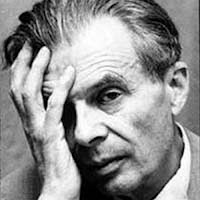
Period 1: Your portfolios are due. Please complete your reflection and turn in your work as per usual.  Period 2: Classroom Both Brave New World and A Clockwork Orange are dystopian novels. You can learn more about dystopian fiction here at this link .  Let me introduce you to your authors: "No country can be really well prepared for modern war unless it is governed by a tyrant, at the head of a highly trained and perfectly obedient bureaucracy."  -- Aldous Huxley (Oh, so horribly true, Mr. Huxley...) Aldous Huxley  (1894-1963) is best known for his novel  Brave New World , but he wrote various other novels (see below). By the end of his life, Huxley was known around the world as one of the most influential 20th century intellectuals. His work is highly satirical and imaginative. Huxley was born in  Godalming , England in 1894 and moved to Hollywood, Los Angeles in 1937. His grandfather,  Thomas Henry Huxley , was an emine...

A Note on Critique Writing

Critique can often be found in research papers, position papers, book/film reviews, and essay exams. In the business world, critiques are often found in business plans or proposals, grant writing, legal briefs and legal arguments, and legislation or policy briefs. Since most of what you are likely to read from day to day is writing that is meant to inform (newspapers, magazine articles, online news briefs, consumer reports, etc.) a reader must evaluate the accuracy of information presented by the author. We might evaluate the author on the significance of the information, as well as, the interpretation of the information presented to us by the author (the author's tone and POV, for example). In the media, we are often bombarded by writers trying to sell us something--to convince us of a point of view or idea. Evaluating how persuasive a writer is, can also be helpful for the same reasons interpreting informative writing is helpful. Of course, you are also expected to inform ...

Portfolio Rubric - Marking Period 2

4 = Exemplary 3= Accomplished 2= Promising 1=Beginning 0=Failing Exemplary : Thoroughly and artistically developed characters, plot, structure, conflict, theme, and setting. Uses vivid description, effective diction and word choice, tone or voice, POV, imagery, and compelling dialogue throughout portfolio. Uses a variety of effective literary devices that enhance the artistic quality of the work. Writing can be considered “art,” effectively communicating issues central to the human condition in a compelling and creative way. Titles are creative and compelling. Has few errors in spelling punctuation, syntax, and usage. Sentence structure and overall effect of the work is artistic. Format is effective, carefully and correctly followed. Work includes evidence of several revised drafts that improve on earlier drafts. Work included in portfolio reflects a wide range of styles and genres. There is twenty or more full typed pages of new work. Uses lab and class time to full extent; always...

Portfolio; The Review

LAB: (Please read!) You have written many reviews over the past 4 years in our creative writing classes. Review (or critical review (also called evaluation writing)) is a critical skill you will need in college writing. In a review, you (the author) attempt to evaluate a set of criteria to determine if something was good or bad. The review usually includes an introduction (a hook, followed by a lead, followed eventually by your thesis or claim). The introduction is followed by a short summary of what you are evaluating (usually an article or book, but it might be a film, a play, a poem, an artistic work, or a variety of things). The second body paragraph might include the author's arguments or the author's theme. Generally, you are trying to explain WHY the author or subject did or wrote what he/she did or write. This is mostly analysis--using examples drawn from the text to support your thesis or claim. Finally, after these parts, the author (that's you!) evaluates h...

Sword in the Stone Reviews

I'll add more details, suggestions, and guidance on writing the review next class. For those of you who received your "test essay" on  The Once & Future King , feel free to revise your essays and place these in your writing portfolio. The highlighted line in your essay is your assumed thesis. Since you were reviewing the simple question: Was T.H. White successful writing a good book? Your thesis should answer this basic or root question. The body of the essay would then follow by breaking down the REASONS why you think that he wrote a good book or didn't. You then use evidence from the text to support your answer. Evidence just like court. More information will be discussed on this issue next class. If you don't get your essay back today, you will receive it next class.