Posts

Cultural Research; Examining History

For your research today, please choose one of the following social institutions to examine: Government Economy Religion Education Family Arts (select a specific art form) Then examine your topic as it relates to culture in the United States. Find out how the institution has changed over its history, how it affects our culture, and how it leads or connects to pop culture and pop cultural topics. You will need to start somewhere online and get a basic understanding of what it is you are attempting to research. Once you've done that, keep track of key issues and side-issues in your topic. Take NOTES. Your notes will lead you to further research. Eventually, you will want a combination of text and visual images to present your social institution project to the class. During class we will select our next novel, sticking with Australian authors.
Pop Culture Presentations & Social Institutions

We will continue our pop culture presentations today. Here is another site for articles on Pop Culture  (a good source for media) and Mashable (a good site for culture, style, tech & business). To test your knowledge, play this game: You Know It! Where does this get us? Our next task is to do a little research. Our goal is to examine one of the following major social institutions and explore its history in America. You will want to research and create a graphic design to share with the class based on your research. You may select any of the following suggestions to visually capture your work: a padlet , a time line, a collage (or online collage: fotor photo collage  or ribbet , glogster , kerpoof  studio, mindomo mind mapping , animoto (make and share videos), or good old poster paper or arts/crafts stuff, etc. We recognize five major social institutions that have been evident in some way in every civilization in history: government  religion  e...

Pop Culture Prezi Presentations; Jennifer Government

After our discussion on the book Jennifer Government , we will begin our Prezi presentations on our pop culture topics. When you present, please address the entire class. You should try to make eye contact with us, although to advance your frames and topic, you may find it helpful to refer to the screen. Viewers: as we watch the presentation, please provide some feedback to the presenter by completing the handout. Additionally, take notes on aspects of the presentation that you might be able to use in your own projects or writing in the future. Use this presentation time to think about ideas central to pop culture and its issues in forming culture. HOMEWORK: None.

Portfolios: Feedback

Notes on portfolios: Rubric and feedback Pacing Revision in MP 2 Questions/Concerns Some writers had specific questions about how to deal with these issues in their writing. To help you, take a look at these links and read the material presented. You'll be glad you did. Titles. How to come up with an appropriate title . Help with conflict tropes Plot tropes 7 Different types of plot: Overcoming the monster/evil obstacle : protagonist learns of a threat to humankind and sets out to defeat or destroy it. Rags to riches : protagonist starts off inadequate (weak or even economically poor) but through a series of events that help the character mature and become responsible, the protagonist gains wealth and/or power. The Quest : protagonist starts on a journey that will help develop and strengthen some aspect of the character in search of a macguffin (an object of little importance ultimately, although much importance is attributed to the object in the beginning of th...

End of Marking Period; Popular Culture Prezi

This morning complete any missing and/or work due. Work on your Prezi projects (last day to do so before they are due!) and/or read Jennifer Government . There are a lot of links, clips, articles, etc. that we have covered this marking period. Some of you haven't looked at these things, so please take some time today to refresh your memory and reinforce some of the ideas of this course. If you haven't yet turned in your portfolio, you must do so today by the end of class or you have received a '0' for your portfolio grade this marking period. This is a major assignment. HOMEWORK: Complete Jennifer Government . Complete your Prezi projects.

Pop Culture Prezi

Please turn in your portfolios today. They are due. See previous posts for details. In the lab, please continue your pop culture prezi. Your deadline for this assignment is Tuesday, Oct. 22. Continue reading Jennifer Government . Aim to complete this novel by next Tuesday. Pop Culture Food for Thought. As you watch note how pop culture references, allusions to classical texts, and high culture meets low culture: Maggie Simpson: The Longest Daycare Logorama (Oscar winning animated short film) Thugnotes: 1984 Quentin Tarantino's References to Pop Culture in His Films South Park: The Avengers Bugs Bunny: Barber of Seville

A Day of Gentle Prodding; Portfolio!

This morning, please use the lab to further the following projects: --The cultural settings story --The pop culture prezi --Your portfolio --Reading Jennifer Government Your portfolio is scheduled to be due today. In your portfolio you will need the following drafts: 1. The cultural settings story 2. Any other work you have written up (poems, scenes, articles, essays, stories, etc.) 3. A marking period reflection (a 1-2 page reflection on the work and projects you are writing, or an explanation of the work you have put in your portfolio, or identification of what you want feedback on in the portfolio (apart from the general rubric: see below). Portfolio Rubric: 4 = Exemplary 3= Accomplished 2= Promising 1=Beginning 0=Failing Exemplary : Thoroughly and artistically developed characters, effective characterization, compelling or creative plot, structure, conflict, theme, and setting. Uses vivid description, effective diction and word choice, tone or voice, POV, imagery, a...

Popular Culture Prezi; Portfolio

What is  Popular Culture ? Popular culture studies popular culture from a critical theory perspective. It is generally considered a combination of communication studies and cultural studies. Barriers between so-called high and low culture have broken down, which encompasses such diverse media as comic books, television, mass media, and the Internet. The theory of progressive evolution : Capitalist economies create opportunities for every individual to participate in a culture which is fully democratized through mass education, expansion of leisure time and cheap entertainment, media and paperbacks. In this liberal view, popular culture (low culture) does not threaten high culture, but is an authentic expression of the needs of the people. Click above at the link (a very pop culture idea in the first place) and read about Popular Culture on Wikipedia (another pop culture idea). Take notes to define, understand the component parts of the subject area, and its char...

Pop Matters; Pop Culture; The Stone Gods Discussion

This morning, please share your Pop Matters articles with the class. Afterward, take the quiz on the book The Stone Gods . Then we'll discuss the book. After our discussion, we will return to the lab to choose a popular cultural topic for our Prezi projects. Here is the padlet we created that may give us some ideas concerning topics. Padlet: Pop Culture After selecting a topic, begin researching it. Remember that you must cite your sources. If you use a particular website for information, please make sure you write down the address, author of the site, and date you consulted the material. If it is a journal or article, you will need to know the title, author, original publication information, etc. HOMEWORK: None. Portfolios are due next week.

Pop Culture: Pop Matters, Key Vocab, Padlet, & Prezi

 After our sharing of the Pop Culture articles, please turn in you homework for participation credit. In the lab, add pop culture examples from padlet. Click here and add visual pictures of pop culture, counter culture, trash culture, sub culture, progressive evolution, high/low culture, & fads. After our brainstorming, make a personal list of popular cultural topics you might like to research. After writing your list, go ahead and choose a topic, then research your topic. After researching your topic, you will eventually be asked to create a Prezi and class presentation to share your topic with the class.  HOMEWORK: The Stone Gods : Please read part three and four and complete the novel by Monday, October 7. Work on your portfolio, Pop Culture project/research, read the article "The Simpsons".

Stone Gods Discussion; Pop Matters

This morning, please gather in one of the two groups and complete the discussion questions. During the second 1/2 of class, please return to the lab to investigate these crucial key terms. In your notes, please identify and define the following 10 terms: Pop Culture  Counter culture Subculture Trash culture Theory of progressive evolution High culture/low culture  Mass media Folklore Urban legend Fads After researching and defining these concepts/terms, go on to the following assignment: Please link to the website:  Pop Matters  (a popular culture on-line zine). During class: please peruse this site. Choose 3 articles in any of the following categories: television, movies/film, music, gaming, dvds, books, comics, multimedia, events or culture and read them. Afterward, see the homework section. HOMEWORK: To turn in for participation credit, please write a short 1-2 paragraph summary of each article. Make sure to include reference to title and autho...

Allusions in The Stone Gods

In the novel The Stone Gods by Jeanette Winterson, the author uses a variety of allusions. The character's names, for example, are allusions to other literary works. For your own education look up the references to Billie (Billy), Crusoe, and Manfred, for example. Sometimes the allusion is a direct quotation from a famous poem or literary work. For example: THE SUN RISING b y John Donne             Busy old fool, unruly sun,              Why dost thou thus  Through windows and through curtains call on us?  Must to thy motions lovers' seasons run?              Saucy pedantic wretch, go chide              Late schoolboys and sour prentices,        Go tell court huntsmen that the King will ride,        Call country ants to harvest offices;  Love, all alike, no season knows nor clime,  N...

Cultural Setting Story--Last Day; Stone Gods Discussion - Part One

This morning in our lab, continue your cultural settings narrative. Review the last few class agendas for links, advice, and prompting questions that you may have ignored. When you get stuck in your narrative, go back to brainstorming and work your way out. We will be returning to the classroom for a little while, so copy your file, print it, etc. and finish it on your own time. It is not due until you turn in your marking period 1 portfolio (likely October 11). If you don't want to write this morning, read The Stone Gods . This Sunday at 3:00 is the BOA reading with Li Young Lee. Read some of his poetry as an introduction. More can be found here . If you are attending, please arrive by 2:45. During period 2, return to the classroom 238. We will conduct a discussion and analysis of the first part of The Stone Gods . Get into discussion groups, talk, and complete the analysis questions. Hand the notesheet in by the end of period 2. HOMEWORK: Please read The Stone Gods (par...

Cultural Settings Project: Narrative; Introduction to Jeanette Winterson

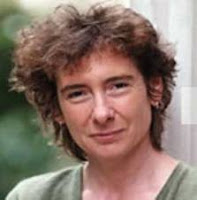
Image
To begin class today, please gather your notes for your setting project and look through them. If you need to, share your notes with another willing writer and respond to each other's setting or ideas. Brainstorm possible stories that could take place in the setting you have created. As a partner, try to ask some questions that do not seem clear to you as a listener or reader. Then exchange places with your partner and share again. If you feel you are not yet ready for this step, look through your own notes alone. Spend the first half of the first period in this activity. After 15-20 minutes, begin fleshing out a story or narrative. Consider: Who will be my protagonist? What does my protagonist wish to accomplish? Name a few goals my protagonist might need to meet. What makes my protagonist unique or likable?  What flaws or mistakes or bad decisions has my protagonist made in the past? How have these mistakes or decisions affected his/her life in the present? Who or ...

1984 Test; Cultural Settings Project Part Two

This morning, after reading the article, please review the class's  Cultural Padlet . You may use any of these ideas as minor or major conflicts in any story or poem you write this marking period. Yes, you can even use this for your poetry class, if you are in need of a cultural conflict. This morning during 2nd period you will be taking the timed test on 1984 . During period 1, please begin brainstorming or fleshing out a plot, character list, or coming up with an idea for a story, play scene, poetry cycle, or script in which you use your cultural setting as a backdrop for the plot and character action. Refer to previous posts to flesh out your cultural setting. If you get stuck, go back to brainstorming and developing. Once you have an idea how to move forward, begin your project using the setting you created to complete a narrative draft. A few of you have asked about comic book scripts. Here's a helpful site to help you with that format.  And another one . We will b...

Common Cultural Problems

After our morning reflection/article, please attend to the following cooperative task. There are a variety of cultural problems that you can imbed into your stories, poems, or scripts (or essays) to build conflict. If we start with the basic types of conflict in literature, they include: Human versus Human Human versus Nature Human versus self Human versus the Divine Taken in a cultural context, gather in groups of 2-3 this morning and discuss the various ways in which conflict rises from culture. You may consider such broad areas as economics, health, religion, government, laws, taboos, education, art, entertainment, technology, geography, social institutions, trade and commerce, cuisine, or any other topic you think relevant. Make sure members of your group contribute to your list. Then create a graphic depiction of your brainstorming list. Use padlet as a way of gathering/presenting your ideas. The link is here: http://padlet.com/wall/wtt5hxsn33 Read the article: Diff...

1984: Part III; Creating a Cultural Setting Project

Use the lab this morning to work on your original cultural setting. Your task, again, is to create an unique setting in which to set a story, much in the same manner as George Orwell or other science fiction/fantasy, historical fiction, etc. authors do. Keep your notes, not only for your story, but also to turn in with the completed project. Use your class notes to help you brainstorm ideas. Your setting will require you to consider key cultural aspects such as traditions, history, art or artifacts, religion, government, economics, cuisine, entertainment, language, and a whole host of other ideas. Apart from Patricia Wrede's world building questions , take some time in the lab to look for more ideas for world building, take a look at World Building from Television Tropes . For fantasy, this article may help ( Creating a Realistic Fantasy World ), and advice from writer Victoria Strauss . If you are having trouble coming up with an idea, try an alternate history . Here's...

Creating An Original Cultural Setting

This morning, please gather in the small groups where you share the same cultural topic on 1984. You will discuss your notes and examples, then wait for further instructions on how to share this information with the rest of the class. After our activity, we will be moving up to the lab to complete the following tasks: 1.  let's try some of our own planning to create our own culture.  Science Fiction and Fantasy writers often have to create a culture that is at once creative and original, and also cohesive. A reader of sci-fi/fantasy needs to feel as though the author has created a unique world in which to set a story. Even if you aren't interested in writing sci-fi/fantasy, other forms of writing demand this sort of skill. Historical fiction, magical realism, and satire, for example, are just a few popular choices. So, too, is the genre of horror and, or course, dystopian fiction. Even realist writers (any novelist really) needs to be able to balance a fictional world s...

Rights & Responsibilities Assembly

This morning we will attend the Rights & Responsibilities assembly. If we have any time after this event, we will come back to the room and begin discussing 1984. HOMEWORK: Continue reading Part 2 of 1984. Pg. 104-179 for Friday. Complete the "note" section for your handout (1984, Cultural Elements)

Culture in 1984; The Other; & Creating a Cultural Setting

Coming Attractions: Wednesday we will be attending a Rights/Responsibilities assembly. Please be on time. Class starts at 8:05. Bell Work: We will begin class reading a short article and responding to the essay in our journals. Throughout this course, we will encounter various texts and use a response technique such as brainstorming, freewriting, cave drawing, or mind mapping. Our goal is to strike something that causes us to create a written response in any genre of creative writing: a short story, a poem, a poem cycle, an essay, a memoir, a song, a film, a script, a comic, or any other written form. Let's cover some of the important culture vocabulary we missed Thursday. See post and handout below for details. What hegemonic groups can we use to our advantage when selecting an audience for our writing? Let's discuss. Group Work/Collaboration: After discussing and learning key vocabulary, each of you please take one of the 1984 questionnaire sheets. Spend 10-15 minute...